
01
Apr
Testosterone & Training - The Two Go Together, But Why?
Reading time - 11 mins
Testosterone - What makes testosterone so important for someone is who is training and exerting their body, wanting to recover and improve/progress towards their goals? Let’s take a look at what testosterone does in the body.
Testosterone Physiology
Testosterone, as we know, is the primary male hormone, responsible for the production of typical male sex characteristics that are present from week 7 in the womb. From this stage, the testosterone developed in the testis goes on to be converted to Dihydrotestosterone (DHT) to develop the prostate and the external genitalia.
From here we see more of the obvious male sex traits develop into puberty and beyond:
- Male hair growth patterns.
- Deepening of the voice.
- Muscle density.
- Acnes – not always, but common, during puberty.
Entering the stages of puberty, the hypothalamic-pituitary-gonadal axis plays a crucial role in regulating surging testosterone levels and gonadal function. The hypothalamus is like the old-school telephone operator that connects the caller to the person receiving the call; it’s receiving signals from all sensory information 24/7. From here it sorts the information and relays the correct action required.
In the instance of testosterone production, the hypothalamus secretes what is called gonadotropin-releasing hormone (GnRH), this gets directed to the anterior pituitary gland which then secrets luteinizing hormone (LH) and Follicle-stimulating hormone (FSH). These two latter hormones are gonadotropic hormones, meaning that they are transported via the blood and act only on specifically targeted receptors on the Leydig cells of the gonads to produce testosterone.
Testosterone Feedback Loops
The body is a very efficient machine, it works constantly from communication feedback to pivot, adjust and maintain balance. The same is said for the production of testosterone, this is built into what is known as a ‘negative feedback loop; meaning that testosterone can limit its own production. How? High levels of testosterone in the blood relay feedback to our control centre to notify that the secretion of GnRH can subside until required again, the hypothalamus then communicates this to our anterior pituitary to be less responsive to the stimulation of GnRH. This sounds worse than it actually is, in reality, GnRH is secreted in pulses every 1-3 hours, so these feedback loops delays or deficits are few and far between. [2]
Not all testosterone is free to do as it pleases on its own in the body. There is a small amount of ‘free testosterone available, the rest of the total testosterone in the body is bound with plasma proteins, or what is commonly known as ‘sex-hormone-binding-globulin’ and albumin, which is just a form of protein made by the liver. The small measure of free-testosterone acts on more specific areas of the blood tissue such as:
- Seminal Glands.
- Bone.
- Muscle.
- Prostate gland.
At a cellular level in the body, testosterone is converted over to DHT via an enzyme process involving 5-alpha reductase. Binding to cell receptors and regulating protein expression – this is the way in which various forms of proteins are synthesized in the body depending on the functional need of our cells (it’s a lot more technical than that, but we will skip out on the lengthy description of DNA and RNA in this instance).
As we mentioned earlier, testosterone is self-regulating – when we have a surge of testosterone that is too high, we can get more of a trickle overflow into Dihydrotestosterone (DHT) conversion, which is often not a bad thing, we still need DHT for critical processes in the body and DHT is actually known to be around several times more potent than testosterone [3] – however, too much of one thing is not always ideal. Higher conversion of test to DHT is often shown in male pattern baldness and acne. However, excess DHT effects are more commonly seen in women as hirsutism, acne, and absence of menstrual cycle.
Testosterone as we age

As men age, testosterone production does begin to naturally decline, most often men reach their peak level of testosterone production in their mid to late 20’s and from here it slowly declines. Less commonly referred to as ‘Andropause’ is the state in which testosterone declines more rapidly once men reach their 50s and by the age of 80 most men sit at about 20-50% of their total peak testosterone levels of their younger years. [4]
This can lead to a symptom such as seen in the small-scale study of 53 men aged above 50 which reported: [4]
- Low libido (91%)
- Depression/low mood (68%)
- Lack of energy (89%)
- Erection problems (79%)
- Increased lethargy (77%)
- Memory impairment (77%)
- Loss of pubic hair (70%)
- Decrease in endurance (66%)
- Loss of axillary hair (55%)
- Deterioration in work performance (51%)
Low testosterone serum levels have since been associated with male andropause syndrome. [4]
Taking care of your Testosterone
There are many beneficial factors that support healthy testosterone production and serum levels, those include:
- Resistance training.
- Dietary support – ensuring you are getting ample foods to support your training, recovery, and nutrient requirements to help with the production of testosterone. Healthy levels of cholesterol are crucial in the formation of sex steroid hormones in the body, that is where their origin comes from.
- Sleep – one of the most underestimated aspects of healthy recovery, growth, and testosterone support in men is sleep. As little as one week of lost sleep can reduce testosterone levels by 15%. [5]
- Supplements – supplements should always be supplementary to the fact that you are adhering to the above aspects first and foremost, no point in adding special fuel to a car if you don’t have the wheels and engine to go with it. If you are wanting to fill in specific nutritional gaps in your diet that would assist in the production of healthy testosterone levels – you can opt for options available like that of
Ares by ATP Science, recognised by the Therapeutic Goods Administration in Australia to:
- Maintain and support healthy libido.
- Support healthy sexual function.
- Helps support testosterone formation and synthesis.
- Support testosterone levels.
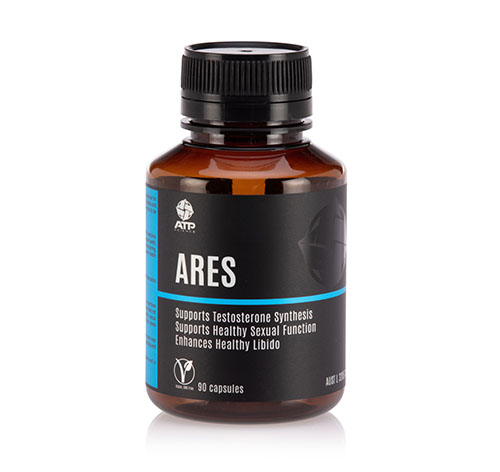
Ares by ATP Science
Paired with your essential mineral micronutrients such as those found in ZMAG also recognised by the Therapeutic Goods Administration in Australia to:
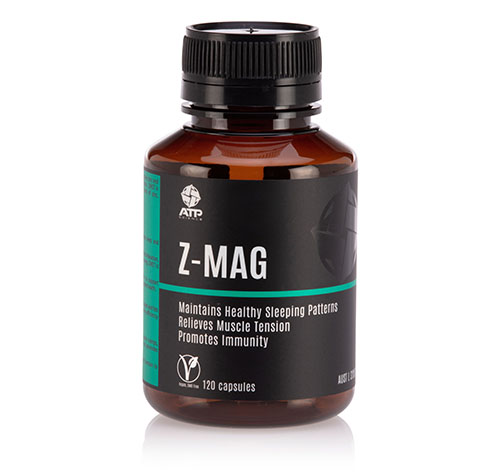
Z-Mag by ATP Science
- Support healthy sleep patterns.
- Support a healthy immune system.
- Maintaining bone health.
- Decreasing muscle cramps.
- Support nervous system function.
All of these elements allow for a lesser tensile state when we may be stuck in “fight and flight” mode. In this fight and flight mode, testosterone production is often less of a priority [6], and by returning to a “rest and digest” state you can support the body to maintain the communication and feedback loops needed to maintain healthy testosterone levels.
Basaria S. Reproductive aging in men. Endocrinol Metab Clin North Am. 2013 Jun;42(2):255-70.
[Plant TM, Marshall GR. The functional significance of FSH in spermatogenesis and the control of its secretion in male primates. Endocr Rev. 2001 Dec;22(6):764-86.
Grino PB, Griffin JE, Wilson JD. Testosterone at high concentrations interacts with the human androgen receptor similarly to dihydrotestosterone. Endocrinology. 1990 Feb;126(2):1165-72. doi: 10.1210/endo-126-2-1165. PMID: 2298157
Wu CY, Yu TJ, Chen MJ. Age related testosterone level changes and male andropause syndrome. Chang Gung Med J. 2000 Jun;23(6):348-53. PMID: 10958037.
Leproult, R., & Van Cauter, E. (2011). Effect of 1 week of sleep restriction on testosterone levels in young healthy men. JAMA, 305(21), 2173–2174. https://doi.org/10.1001/jama.2011.710
Herman, J. P., McKlveen, J. M., Ghosal, S., Kopp, B., Wulsin, A., Makinson, R., Scheimann, J., & Myers, B. (2016). Regulation of the Hypothalamic-Pituitary-Adrenocortical Stress Response. Comprehensive Physiology, 6(2), 603–621. https://doi.org/10.1002/cphy.c150015
More Fit Talk

Take your training up a notch with these game-changing gym accessories! Your gym bag will have everything you need to smash a killer workout.
July 8, 2025

Is this gloomy weather crushing your motivation to train? We've got you! Here are 5 hacks that will have you excited to exercises in the cold winter months.
June 17, 2024

We all know returning to the gym after time off can be no easy feat. Let's look at some solutions so you can get back on track with your workouts.
February 29, 2024

Whether you’re looking for a yoga class that will help with your flexibility or with strength, there are many yoga practices to choose from.
February 1, 2024

Unsure whether or not to try HIIT? This style of training is super popular amongst the fitness community, but is it really as good as they say it is? Let's find out!
January 2, 2024