Whey Protein Types Explained

16
Jul
Whey Protein Types Explained
Reading time - 7 mins
During the cheese making process, whereby milk is split and curdled to achieve separation of curd and by-product, the by-product that is left and was previously discarded is what we know today as whey.
After the enzymatic process of cheese creation occurs, the white milky product remaining is known as whey milk and is used in multiple avenues of food production including being put back into particular types of cheese but also can then be used to create whey protein supplements.
Whey protein is a mixture of globular proteins isolated from the whey milk left over from the cheese making process and is now commercially sold for the use in dietary foods, baby formula and sports supplements. Whey protein is a dietary food product that can be used to either fortify foods or a diet lacking in essential proteins for cellular function, tissue repair and organ health or as a recovery supplement designed to maximise muscle recovery.
In its natural state, cow’s milk contains approximately 20% whey and 80% casein, whereas breast milk is higher in whey protein at 60% and caseins at 40%. Knowing this, the primary goal of a manufactured whey protein in its raw form is to provide maximum whey protein content with minimal fats, carbohydrates and caseins as we have very low whey protein availability in standard dietary sources.
So what are the differences between varying whey supplements?
Whey Protein Concentrate (WPC)
Whey protein concentrate is the first filtered version of whey protein manufactured from the cheese making process. The primary characteristics of WPC are:
- 80% protein
- Low carbohydrate
- Low fat
- Mild lactose
- High in immunoglobulin’s
- High in prebiotic factors
- Moderate digestion (8g per hour)
- Creamy in mouth feel
WPC is the most natural form of whey protein due to its low level of processing and is best suited for anyone looking to fortify their diet with a protein source and is looking for something in its most natural state.
Whey Protein Isolate (WPI)
After whey protein is first separated from whey milk and WPC is created, further filtration via the use of heat and chemicals or cross-flow filtration with water is used to increase the purity of the protein and WPI is formed. The primary characteristics of WPI are:
- 90% protein
- High BCAA content
- Low in carbohydrate
- Very low in fats
- Very low/No lactose
- Low to moderate immunoglobulin’s
- Low to moderate prebiotic factors
- Faster digestion (10g per hour)
- Watery mouth feel
When looking into the manufacturing of WPI, powders that have been subjected to heat or chemical filtration such as ion exchange whey, will traditionally yield lower carbohydrates and fats, however, all of the dietary health benefits from the immunoglobulin’s and good bacteria are denatured and no longer available. If you are looking for a high purity protein that still includes these factors, go for a cross flow filtration whey as this process only uses water.
A WPI is a perfect protein for someone who has mild lactose sensitivity yet would still like to use a whey protein and is ideal for enhancing muscle recovery due to its high amino acid profile.
Hydrolysed Whey Protein Isolate (HWPI)
HWPI is the final stage of whey protein processing, whereby the amino acids bonds are cleaved to form smaller chains of amino acids known as di-peptides and tri-peptides, meaning 2 and 3 amino acid bonds.
In doing this a HWPI has higher gut permeability and easier digestion and is characterised by:
- 80-90% protein
- Very low in carbohydrates
- Very low in fats
- Very low/no lactose
- Low immunoglobulins
- Low prebiotic factors
- Faster digestion (12g per hour)
- Watery mouthfeel with potential bitterness
A HWPI is the perfect protein for someone with very poor gut digestion of whey and yet would still like an animal-based protein source utilising a full spectrum of complete amino acids.
Some Of Our Top Selling Whey Proteins

Lean Whey By Genetix
This impressive lean whey protein from Genetix Nutrition is one of our most popular products at Nutrition Warehouse and the results simply speak for themselves.

Lean WPI By Genetix
This is a supremely effective Lean WPI from Genetix Nutrition gives you one of the highest quality, ultra-flow filtered, Whey Protein Isolate (WPI) available.
Final Notes
Whey protein is a great protein source and can be utilised in any form to improve dietary protein intake. Whether you use a WPC, a WPI or a HWPI in relation to muscle growth really does not matter, however each version of whey protein offers varying benefits to suit the users needs.
In essence, the best whey protein for you is the one you will use the most, enjoy the most and digest the best.
More Fit Talk

Not sure which Applied Nutrition protein to grab? We break down Iso Clear vs Critical Whey so you can pick with confidence.
September 2, 2026

Your September shred stack sorted: protein, fat burners, aminos and recovery picks built to get you lean, fast.
August 23, 2026
This top 5 protein powders help you hit your goals faster. From low-calorie blends to metabolism-boosting formulas, these proteins are built to keep you fuller for longer, crush cravings, and preserve lean muscle mass while you shred.
August 22, 2026
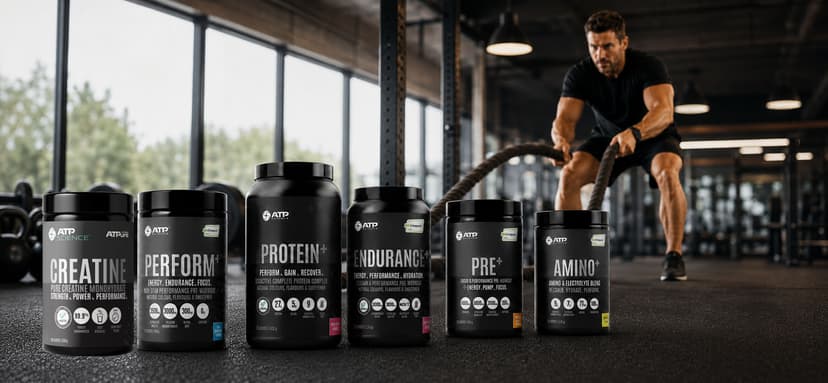
Pre+, Endurance+, Perform+ or Protein+? Here's exactly which ATP Science Performance Plus stack matches your training goals.
August 11, 2026

Build a practical ATP Science supplement routine to support energy, hydration, strength, performance and recovery throughout your active week.
July 31, 2026