
Top 3 Supplement Must Haves

29
Aug
Top 3 Supplement Must Haves
Reading time - 12 mins
It’s the age-old question, what supplements do I need versus which supplements may benefit me? In this article I will be discussing the must haves in their truest sense, whereby their benefits are generally not achieved through dietary consumption and require extra supplementation for optimal benefits.
Vitamin D3
Vitamin D is a vital fat-soluble nutrient that is created by the body via the use of circulating cholesterol in the presence of adequate sunlight, which is dependent on the UV level and length of exposure. Contrary to what you would expect, despite being the ‘sunburnt country’, a large quantity of Australians are either deficient in vitamin D or at least below optimal (1).
Benefits of supplementing Vitamin D3 include:

So as you can see, this vitamin is critical in a multitude of physiological functions. Now it is possible to consume dietary Vitamin D from foods such as fish, eggs and fortified dairy, just like you can also get your Vitamin D from the sun, however, with 30-60% of all people in a study referencing 25 000 Australians (1), measuring in at sub-optimal or low levels, its safe to say we can all benefit from Vitamin D supplementation.
Similarly, Vitamin D3 supplementation has also shown to improve insulin sensitivity in subjects suffering from impaired glucose tolerance (2), such as pre-diabetic patients and also in those with pre-determined type 2 diabetics as well (3).
Current Australian standards suggest 400iu a day of Vitamin D3 is all that is needed, however studies have found no ill causes in doses up to 10,000iu per day for short periods of time as well.
So how much do you need?
Aim for 1000iu daily for general health benefits, preferably taken with a meal containing fat to ensure its bioavailability is maximised, however, higher dosages of 4000-10,000iu can be utilised in short periods to improve glucose tolerance and insulin sensitivity (4) in those consuming large quantity of carbohydrate or if you are suffering from expected glucose tolerance issues.
Magnesium
Secondary to Vitamin D, Magnesium is next on the list for both its importance in supplementation but also in its level of deficiency in westernised countries like Australia. Magnesium can be obtained more readily than Vitamin D from dietary sources, such as nuts, however these are traditionally a low consumption food in Australia and are also quite calorie dense so may not be able to be consumed in sufficient amounts.
Supplementing with Magnesium may improve:
Like Vitamin D, Magnesium plays a vital role in the improvement of blood glucose, will reduce neural excitation, which is why its promoted as a sleep supporting mineral and also shows benefits for blood pressure regulation in those who are deficient in magnesium consumption (5,6,7). It is important to note, however, that significant benefits for Magnesium are only documented in those who are deficient, which according to the literature is quite prevalent.
So how much do you need?
Aim for 300-450mg a day of Magnesium from any source, however Magnesium Citrate is considered to be one of the most bioavailable (8). Taking it prior to sleep or after exercise is preferred if you would like to control neural excitation acutely.
Fish Oil
Most people have used fish oil or at least the large majority of us have heard about someone using it, and rightfully so as it is a great supplemental addition to your diet. While it is absolutely achievable to reach your daily limits of omega 3 fatty acids via dietary consumption for general health, it is certainly not an easy task when considering how much salmon you need to consume to reach the required amounts of EPA/DHA (the fatty acids we supplement with) in the context of the amount of fat salmon also contains and whether or not the amount of fat calories fit within your daily caloric limits.

To put it into perspective, 100g of raw Atlantic salmon will provide approximately 1500mg of omega 3’s (9), whereas a single 1000mg capsule will provide 300mg. Salmon is undeniably an incredible source of omega 3’s, however unless you are consuming 120g of salmon everyday, you will be falling below the necessary amount to achieve the benefits of consuming omega 3’s.
So what does fish oil do for us?
| Provides essential fatty acids | Reduced Alzheimer deterioration |
| Reduces heart related disease concerns | Natural anti-inflammatory |
| Healthier blood vessels | Improved cognitive function |
| Improved blood lipid profiles (reduced triglycerides) | Improved glucose tolerance post carbohydrate ingestion |
| Reduced arterial plaque build up | Reduction in depression related mood issues |
It is important to note, however, that supplemental fish oil is recommended especially in westernised cultures like Australia as our meat, egg and dairy intake is high in comparison to our seafood consumption, of which causes an imbalance of omega 3 to omega 6 ratios, and it is this ratio that is directly related to health related issues.
In a snapshot of the literature, fish oil currently has an abundance of studies indicating its benefits for reducing serum triglycerides (10), reduced symptoms of depression (11) and generally improved coronary related disease states (10).
But how much do you need?
Current Australian standards suggest 300-600mg of combined EPA/DHA is sufficient for general health, whereas studies showing the 10 proposed benefits above are in the vicinity of 2-6g of combined EPA/DHA, which is the equivalent of 7-21 standardised 1000mg capsules per day.
As you can see, trying to obtain higher doses for increased benefits is not achievable via food alone and this is why fish oil is in my top 3.
Aim for a minimum of 900mg a day to reach the lower limit dosage and up to 3g per day for additional benefits, taken with food in a spread out fashion throughout the day.
Our Top Picks:
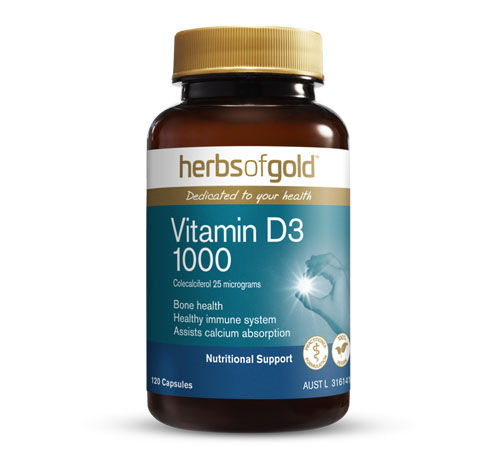
Vitamin D3 1000 by Herbs of Gold

Magnesium Citrate by Imuni
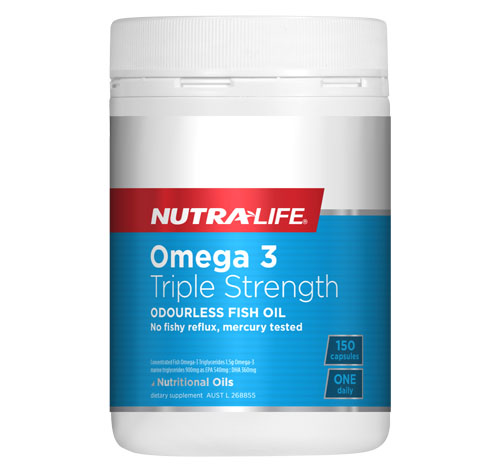
Triple Strength Omega 3 by Nutra Life
Final Notes
Supplementation of vitamins and minerals should be designed around optimising your lifestyle environment so that it coincides with your physical, emotional and mental goals. While it is always encouraged to obtain as much nutrition as possible from your diet, utilising these 3 key supplements will benefit everyone and are great additions to any diet.
Using a maximum dose of all the products attached will only cost you $1.85 per day:
- 2.7g EPA/DHA
- 300mg Magnesium
- 4000iu D3
How much of a price can you really place on your health?
Boyages, Steven and Kellie Bilinski. "Seasonal Reduction In Vitamin D Level Persists Into Spring In NSW Australia: Implications For Monitoring And Replacement Therapy". Clin Endocrinol 77.4 (2012): 515-523. Web.
Nazarian, Shaban et al. "Vitamin D3 Supplementation Improves Insulin Sensitivity In Subjects With Impaired Fasting Glucose". Translational Research 158.5 (2011): 276-281. Web.
Borissova, AM. et al. “The effect of vitamin D3 on insulin secretion and peripheral insulin sensitivity in type 2 diabetic patients”. International Journal of Clinical Practice 57.5 (2003): 258-261. Web
William, B. et al. “Benefits and Requirements of Vitamin D for optimal health: a review.” Alternative Medicine Review 10.2 (2005): 94-111. Web
Kawano, Y. et al. "Effects Of Magnesium Supplementation In Hypertensive Patients : Assessment By Office, Home, And Ambulatory Blood Pressures". Hypertension 32.2 (1998): 260-265. Web.
Rodriguez-Moran, M. and F. Guerrero-Romero. "Oral Magnesium Supplementation Improves Insulin Sensitivity And Metabolic Control In Type 2 Diabetic Subjects: A Randomized Double-Blind Controlled Trial". Diabetes Care 26.4 (2003): 1147-1152. Web.
Hatzistavri, L. S. et al. "Oral Magnesium Supplementation Reduces Ambulatory Blood Pressure In Patients With Mild Hypertension". American Journal of Hypertension 22.10 (2009): 1070-1075. Web.
http://www.nap.edu/read/5776/chapter/1
http://www.foodstandards.gov.au/science/monitoringnutrients/nutrientables/nuttab/Pages/default.aspx
Skulas-Ray, A. C. et al. "Dose-Response Effects Of Omega-3 Fatty Acids On Triglycerides, Inflammation, And Endothelial Function In Healthy Persons With Moderate Hypertriglyceridemia". American Journal of Clinical Nutrition 93.2 (2010): 243-252. Web.
Sublette, M. Elizabeth et al. "Meta-Analysis Of The Effects Of Eicosapentaenoic Acid (EPA) In Clinical Trials In Depression". J. Clin. Psychiatry 72.12 (2011): 1577-1584. Web.
More Fit Talk

Want to achieve peak performance? From protein powders to fat burners, Genetix has everything you need to take your fitness to the next level.
November 8, 2025

Here are our top supps from Nexus for our Black Friday Sale. Whether it's their killer pre-workout, RTD or Super Protein Water, the team at Nexus know how to deliver one of the best supps in Australia!
November 7, 2025

Get the best supplements in your cart now! We’ve picked our top supps from Rule1 Proteins.
November 7, 2025

From the best fat burner to OxyGreens, EHP has some of the best supps in Australia and here are our top 5!!
November 6, 2025

From protein powders to pre-workouts and vitamins everything is on sale. Here are our top supplement picks.
November 5, 2025