
09
Dec
Metabolic Damage - Rare or Real?
Reading time - 13 mins
Let’s talk Metabolic Damage, Adaptions and Reverse Dieting… Is it real, hype or something else? Human ancestry can be traced back to over 6,000,000 years with modern homosapiens having walked the earth for the last 200,000 years. This translates to 7500 generations!
A mere 500 generations ago we decided to live in civilisations, with industrialisation taking hold in the early 1800’s up until this current day.
In that time, we have survived Ice Ages, famine, diseases and wars. As a species, we are pretty robust!
In 1901, Eugene Sandow organised the first every bodybuilding competition. Dubbed the “Great Competition” held at the Royal Albert Hall, London. And since then, our love of muscles and quest for physical perfection has manifested. With advancements in training, nutrition and supplement discoveries; to become bigger, stronger and leaner.
Our metabolism; the MASTER’s Key!
In a clinical definition, Metabolism is the term used to describe all chemical reactions involved in maintaining the living state of the cells and the organism. In laymen’s terms, it is the relationship between what we eat (intake) and what we use (expenditure), that keeps us alive.
Though in the bodybuilding and fitness communities, it’s become the latest BUZZWORD!
“I did a competition last year and I think I have metabolic damage.”
What is metabolic damage?
Metabolic damage is defined as the physiological adaptations that take place when someone is in a calorie deficit for too long. In other words, when the diet used to obtain a certain body composition goal is too severe (in terms of calorie restriction), paired with an excessive training program (doing too much) and followed too excessively (too much time following the plan).
But the real question is -
Whilst researching this article, it seems the brains-trust are still undecided on this one. Some agree, that there are TRUE repercussions for ‘over-doing it’. Where others feel that the human body is an incredibly adaptive organism and ‘master of survival’, and can ‘bounce back’ relatively non-affected.
Food for thought…
We as humans have only lived in civilisations and cultivated crops for the last 10,000 or so years. Before that, we were nomadic by nature, moving around due to different environmental changes and availability in food. Food options that were available today, may not have been available tomorrow. Meaning, we may have gone hungry from time to time.
But now, we aren’t talking survival. We are talking about building and showcasing slabs of ripped muscle!
Is it just a matter of energy in versus energy out?
How do you change your composition? Via training stimulus and supportive nutritional compliance.
If you want to lose weight (fat), eat less = calorie deficit
If you want to put weight on, eat more = calorie surplus
Easy enough to understand. But it is only a partial truth, for there are a few more pieces to the puzzle that we need to take into consideration.
Intake under the spotlight!
Energy intake isn’t as easy to track as you may think. For example, let’s look at the ‘calorie’.
A calorie is unit of measurement used to describe the energy found in each of our macronutrients:
Protein = 4 calories per gram
Carbohydrates = 4 calories per gram
Fats = 9 calories per gram
Alcohol = 7 calories per gram (yes, alcohol is a macronutrient)
So we just count and track our macro’s? I wish it was that simple.
We don’t need calories to survive, we need ENERGY (calories are just how we measure it). But this system that we tend to live by can be viewed as a mistruth.
Some other factors to consider are:
- Humans don’t burn calories. We absorb them.
- Cooking can differentiate the available energy to us from food sources.
- The more processed a food, we can generally absorb more of that energy.
- Labels and calorie information of food sources can also be incorrect (some instances up to 20%).
Expenditure under the spotlight
Let’s look a little more at the variables that affect energy expenditure:
1. RMR (resting metabolic rate)
Resting metabolic rate refers to the amount of energy that you use at complete rest, just to keep you alive. Individual specifics that will affect your RMR will include age, sex, lean mass (composition) etc.
2. TEF (thermic effect of food)
The TEF of food represents the energy required to digest the food that you are eating. Macronutrient type and digestibility from the degree of processing will affect TEF.
3. PA (physical activity)
This is the actual movement you do daily, such as your training. Lean mass and body composition, type and duration of movement will affect your energy expenditure via PA.
4. NEAT (non-exercise activity thermogenesis)
NEAT is all the other stuff, like walking around a shopping centre, washing the car etc. Think of it as staying ‘active’.
The sum of these 4 variables will determine energy expenditure. And as you can see, we have elements that can be completely inconsistent, not only between day to day, but also personally as you change.
Intake (food source + cooking method + digestibility) v expenditure (RMR + TEE + PA + NEAT) = your ideal physique!
Is there an easier way?
I think many of us fall victim to “Paralysis of Analysis”.
The state of over-thinking a situation so that a decision or action is never taken, in effect paralysing the outcome. In other words, looking at every minuscule detail and failing to see the BIGGER PICTURE.
Here is a 2 step process you can use to track your progress:
1. Have you been consistent (in terms of energy intake v energy expenditure)
2. Have you achieved progress dependant on your goal (if you wish to gain, have you gained? If you wish to lose, have you lost?)
Giving yourself some time to assess (tracking your progress weekly is a good start), you will be able to determine an effective plan to obtain further results.
For example, if you are getting ready for a show / getting in shape for Summer:
- Determine your starting position (in terms of composition, how much fat and muscle makes up your composition).
- Determine your end goal (How much you wish to change your composition, how much muscle do you wish to gain and how much fat do you wish to lose).
- How much time are you allowing yourself to achieve your goal?
If your goal is to lose 10kg of body fat and you allow yourself 20 weeks to do this, to track linearly your progress would see to lose 500g per week. Then, make program changes depending on your findings.
Damage, Adaptions and Reverse Dieting
The belief of metabolic damage is that after an excessive calorie restriction (diet), your body adapts to a lesser intake of energy (metabolic adaption to a reduce metabolic rate). Which in turn leads to a series of severe repercussions.
But what REALLY happens post competition?
Are we really left with a somewhat ‘damaged’ metabolism (which means) unable to process an increase in caloric intake?
Though I am not talking a small increase. I am talking about what MOST people really do!

An increase of several hundred calories, or several thousand calories per day? All from highly processed, high fat, high sugar alternatives! The green leafy vegetables traded for Nutella! The lean proteins traded for burgers and fries!
What I am presenting is a more realistic scenario, and I have been there myself. It’s not about your metabolism… it is about YOU!
To get into shape (and using the example I presented above), we have taken 20 weeks of following a consistent approach to lead to a 10kg fat loss result. A slow, trackable, replicable process of daily meals leading into weeks and months, turned around in an instant.
So why the sudden increase in weight?
Is it because of metabolic damage, or is it the sudden and MASSIVE increase in calories, lack of nutritional structure; gluttony combined with zero self-control?
With a reverse diet, the aim is to follow a structured post-competition meal plan.
And that aim is 2 fold:
- Slowly increase daily calorie intake
- Do it in a controlled manner (just like dieting to get into shape in the first place)
You are putting a structure in place to best control your outcome.
That is the real take home message here. We are not looking at the ‘damage’ of our metabolisms.
“We are looking at the HABITS that drives and influences our metabolism.”
Reverse dieting and continuing on with a structured habit
Humans are creatures of habit. During a contest preparation, we have created a habit that has led to your results. And post competition, we have the opportunity to create a new habit to change. The reverse ‘plan’ simply puts into place that new habit to follow.
It is making the decision for you. “NO, a packet of Tim Tams is NOT an acceptable dinner”!
In the post-competition phase, we are actually dealing more with the psychological adaptions to contest prep than we are just the physical.
This itself, is a whole new article…
More Fit Talk
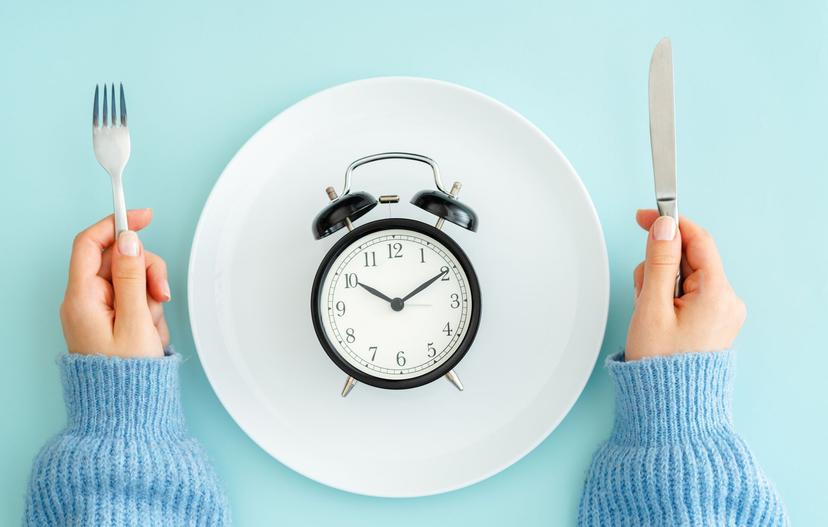
Intermittent fasting is not for everyone, but if you are keen to try it out, here are our 5 tips to help you ease into intermittent fasting.
January 9, 2024
The main benefits are found when the body initiates important cellular repair processes and changes hormone levels to make stored body fat more accessible during a time when no calories are consumed.
January 7, 2024

Learn about quick and easy high-protein breakfast options. Simple and healthy breakfast ideas will help you get stronger, feel fitter and more organised during your work week. By eating protein, you'll have what you need for muscle growth.
December 9, 2023

Imagine giving your immune system a mega boost. With a healthy dose of vitamins, minerals, and L-Glutamine, your immune cells become high-performing, and the health of your intestinal cells, key players in your body's immune response, is maintained at its peak.
July 25, 2023

Most people don’t eat enough greens in their daily routine. According to the Australian Dietary Guidelines, we should be consuming at least 5 serves of vegetables daily.
April 12, 2023