
22
Feb
How To Protect Your Healthy Gut Bacteria
Reading time - 9 mins
HAS YOUR GUT GOT GOOD TENANTS?
Without good residents living in our gut, things get messy. It doesn’t matter how healthy you eat, how much you exercise or what supplements you take, if bacteria renting space in your gut are inadequate, your health will be impacted.
SO, WHAT IMPACTS GUT BACTERIA?

There are many factors that affect gut bacteria, some of you can control and some you can’t. Things you can’t control often include things like:
- Natural vs C-section birth
- Your mother’s health (prior/during pregnancy)
- The environment you grew up in
- If you were breastfed or formula-fed (in this case, what formula?)
- Use of antibiotics
- Age, race, and DNA
Factors you can (and should) control can make a HUGE impact on the quality of your gut bacteria. Some of these things include:
- The quality of your diet
- Exercise (or lack of)
- Stress levels
- How much you travel
- Where you live (think geography and time zone)
- Toxins you are exposed to
- Bacteria you are exposed to
- How you spend your time
- Supplements and drugs you take (and what you don’t take).
BUT WHY IS YOUR GUT BACTERIA SO IMPORTANT?
These bacteria are organisms living inside our body and are super important to human health. Here are a few examples on what gut bacteria can do for us:
METABOLISM OF NUTRIENTS
Gut bacteria are responsible for the metabolism of nutrients, for example, fermentation of certain carbohydrates and some indigestible fibres.
This fermentation produces short-chain fatty acids (SCFA), which we also know that “good” bacteria thrive on.
Therefore, we know that consuming resistant starches (rich in non-digestible fiber) and certain carbohydrates (mainly found in fibrous vegetables) can be super beneficial to your gut health.
IMPACTS TO METABOLISM
We also know that “good bacteria” have positive metabolic effects on the human body: for example, the ability to positively impact lipid (fat), carbohydrate metabolism (how it’s broken down) and the efficiency of pancreas when digesting fat.
These macronutrients can have a huge impact on someone’s metabolic health (body weight, fat, insulin and blood sugar levels, for example).
BOOSTING IMMUNITY
Gut bacteria can also be a really powerful immune system activator.
For example, L-histidine (an amino acid) can be converted by a bacterial enzyme to histamine. Those who suffer from allergies know very well what histamine can do.
There are certain foods that will enhance the proliferation of these bacteria which can escalate an allergic reaction. But there are also foods that can help other bacterias control these “overwhelming” immune reactions caused by histamine.
This means that gut bacteria has an immuno modulating effect, i.e. the bacteria living inside your gut will modulate and shape your immune system.
INTEGRITY OF YOUR GUT BARRIER AND STRUCTURE OF YOUR GASTROINTESTINAL TRACT
One of the major factors affecting your ability to keep what’s in your gut inside, and complete the process of digestion is the variety and quantity of bacteria in your gut.
Basic functions such as protein synthesis, cell apoptosis (mall functioning cell death, and elimination) and immune responses in your gut (such as inflammation and release of defenders white blood cells) rely on enzymes driven by your bacteria.
For this reason, the quality of the bacteria in your gut will dictate how well these (and other) functions happen.
It is also worth mentioning that when immune reactions are constantly activated by either inflammatory foods or inflammatory bacteria, your epithelial tissue can be damaged and this barrier protecting contents inside is no longer effective. The result? A range of uncomfortable symptoms such as constipation/diarrhea, lack of energy, toxicity and others associated with leaky gut.
HOW TO PROTECT THE “GOOD” BACTERIA
So how do you look after your healthy bacteria so they can potentially outlive and overpopulate the ‘bad’ bacteria?
PROBIOTICS
Probiotics are products or foods that contain strains of bacteria existing (or that should exist) in our gut.
While there are many probiotic supplements available over the counter, there are also many foods you can consume on a regular basis which can have a similar effect. Most forms of yogurts, fermented vegetables, drinks (like kombucha), fermented grains, legumes and miso are just a few examples.
The key to populating your gut is “modulating” your bacteria profile to avoid crowds of certain bacterias and extinction of others. One of the most traditional Asian foods, fermented miso, is a great example of a gut modulating food; containing Bacillus subtilis, Bacillus amyloliquefaciens, Staphylococcus gallinarum, Staphylococcus kloosii, Lactococcu.
Regular consumption of fermented miso has shown benefits in conditions such as gastro-esophageal reflux and dyspepsia due to amino acids containing histidine, glutamate and aspartate.
There are also hypotheses based on high concentrations of isoflavones and genistein (found in soybeans). Due to its modulating properties, fermented miso could be beneficial to prevent colon, prostate and breast cancer.
PREBIOTICS
Prebiotics are what you feed the bacteria you already have and are often found in plant foods such as garlic, asparagus, onions, cold cooked potato and rice.
There are also a few sweeteners that fit in this “prebiotic” category, for example, sweeteners derived from plant sources. Certain special fermented foods such as miso also fit into the prebiotic category.
Some people can’t consume a large amount of prebiotic food without experiencing discomfort such as gases, constipation, pain and (sometimes) diarrhea. A solution is finding foods that already provide modulating action to your gut, another reason fermented miso is such a gut superfood.
PROTECTING THE “GOOD” BACTERIA WITH GREAT GUTS MAYO (BONE BROTH SAUCE) BY GEVITY RX
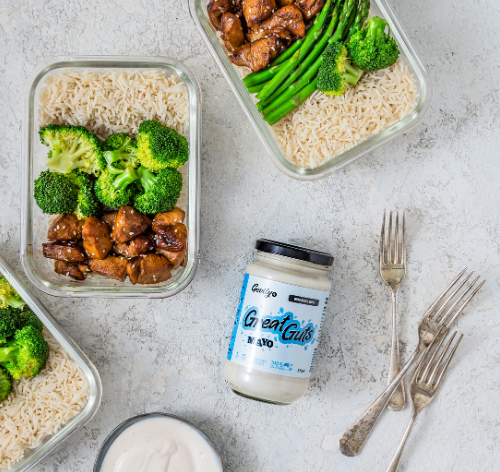
Our Great Guts Mayo was designed to help improve your gut bacteria and supercharge your health. How, you ask?
- Organic Extra Virgin Olive Oil: Just some of the reasons it's touted as the healthiest oil on the planet include being the least processed of all oils, while being high in antioxidants, polyphenols and monounsaturated fats.
- Prebiotic Fibre: Chicory Root fibre contributes a delicious taste & powerful health benefits like improved gut microbiota.
- Psyllium Husk: Boost fibre naturally with Psyllium Husk, a fantastic source of soluble fibre and powerful digestive health regulator for all gut types.
- Apple cider vinegar: the mother of all digestive tonics and super powerful antimicrobial agents.
- 10x more collagen than any other bone broth: to really help you repair potential gut wall tissue damage, reduce inflammation and improve dysbiosis and leaky gut symptoms.
But really, this is just the standard base for all our Body Glue products; 10x more collagen is just what we do.
Shop Gevity RX products now!
Written by Gevity Guru, Health Expert Elza Bevilacqua
Edited by NW
More Fit Talk
Intermittent fasting is not for everyone, but if you are keen to try it out, here are our 5 tips to help you ease into intermittent fasting.
January 9, 2024
The main benefits are found when the body initiates important cellular repair processes and changes hormone levels to make stored body fat more accessible during a time when no calories are consumed.
January 7, 2024

Learn about quick and easy high-protein breakfast options. Simple and healthy breakfast ideas will help you get stronger, feel fitter and more organised during your work week. By eating protein, you'll have what you need for muscle growth.
December 9, 2023

Imagine giving your immune system a mega boost. With a healthy dose of vitamins, minerals, and L-Glutamine, your immune cells become high-performing, and the health of your intestinal cells, key players in your body's immune response, is maintained at its peak.
July 25, 2023
Most people don’t eat enough greens in their daily routine. According to the Australian Dietary Guidelines, we should be consuming at least 5 serves of vegetables daily.
April 12, 2023